
PROJECT:

Visual Search & Decision-Making in Data-Intensive Business Tasks

CONTEXT:

Master’s Thesis, HEC Montréal & Tech3Lab

TOOLS & METHODS:

Eye Tracking (Tobii Pro Fusion, Tobii Pro Lab), Electrodermal Activity (EDA), Face Reader, PsychoPy, Surveys (NASA TLX, SAM, NCS-6), Quantitative Data Analysis (SAS)

PARTNERS:

ERPsim Lab & SAP Analytics Cloud

YEAR:

2026

Cover

Visual Search & Business Performance

As organizations increasingly rely on visual analytics tools for data-driven decision-making, users must rapidly locate and interpret relevant information within complex visualizations. However, individuals differ in their ability to perform this visual search, which affects their analytical performance.

This research examines how visual search ability, cognitive load, emotional state, and individual traits influence performance in data-intensive business tasks. The study integrates Guided Search Theory and Cognitive Load Theory to connect controlled laboratory measures with realistic business decision-making scenarios.

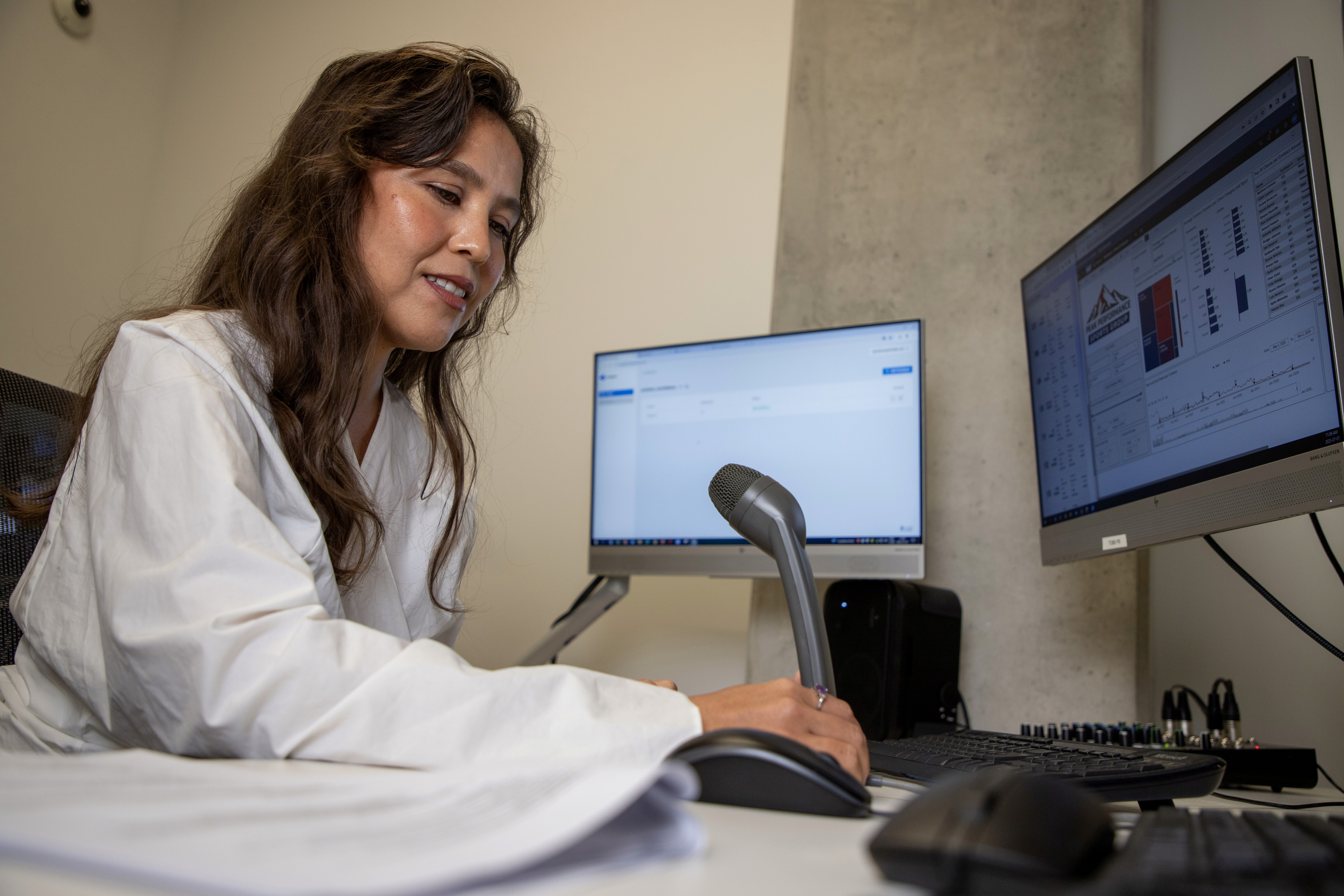
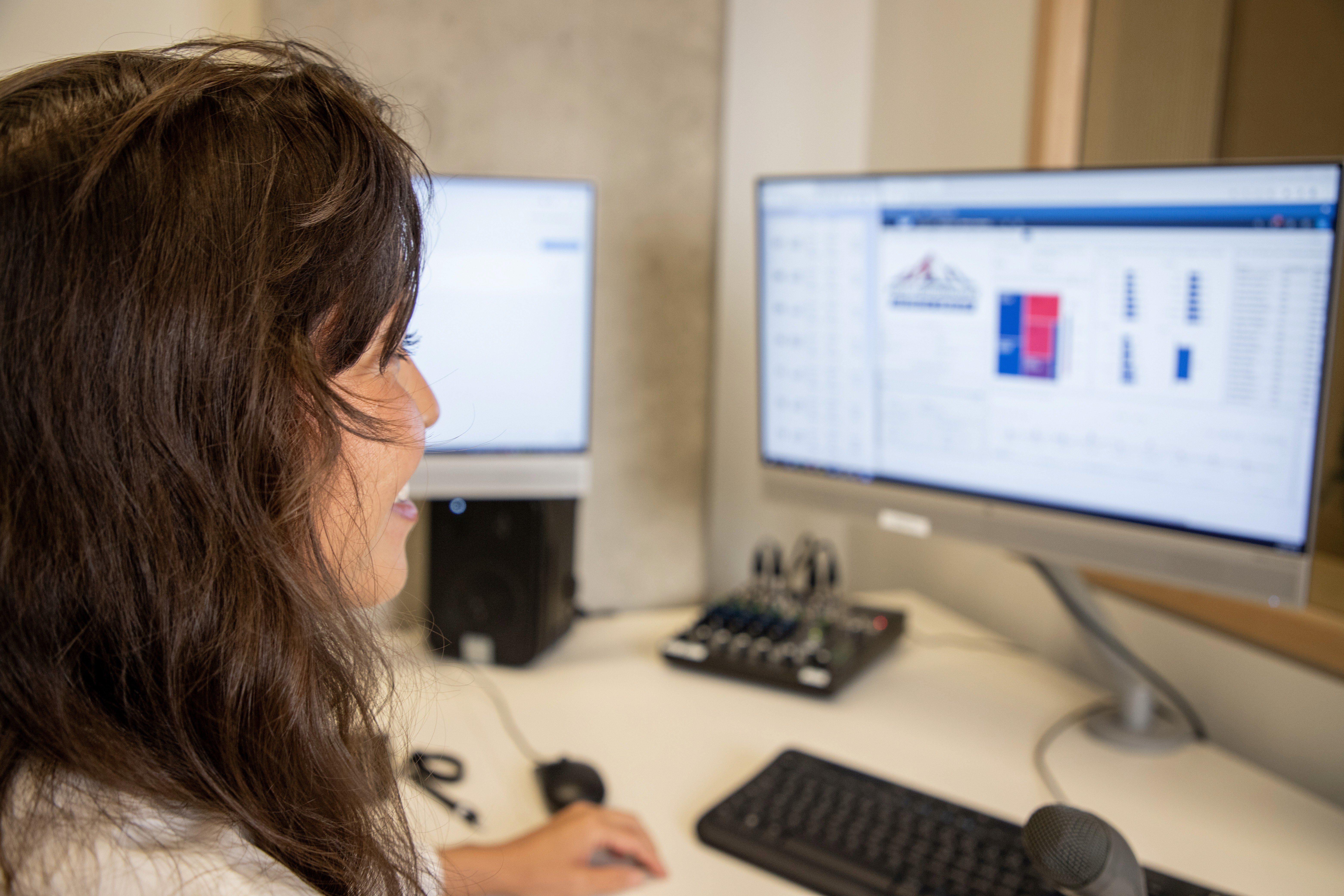
The experimental tasks were based on The Maple Heir, a business simulation game developed by Dr. Michael Bliemel of Ontario Tech University in collaboration with ERPsim Lab at HEC Montréal. The simulation provides a structured environment where participants engage with core business concepts such as entrepreneurship, finance, and operations through interactive decision-making tasks. The platform is integrated with SAP Analytics Cloud, enabling participants to analyze business data through dashboards and visual reports.

This research was conducted at Tech3Lab, HEC Montréal, and funded by the Natural Sciences and Engineering Research Council of Canada (NSERC). The study was part of a broader initiative to evaluate and improve the Business Builders platform developed by ERPsim Lab.

Showcase image
Showcase image
Showcase image
problem and objective.

Modern business environments rely heavily on dashboards and visual analytics tools. However, these interfaces often present complex and dense information, making it difficult for users to quickly locate and interpret relevant data. As a result, individuals vary in their ability to extract insights and make accurate decisions. This creates challenges for effective data use in business contexts.

The objective of this project was to understand how individuals process and interpret business data under different conditions. The research focused on the users' visual search propensity, data interpretation in dashboards with large amount of business data, their cognitive and emotional responses and individual differences such as need for cognition. The goal was to identify factors that improve users' analytical performance and support more effective decision-making in business tasks.

Showcase image
Showcase image
Showcase image
Showcase image
Showcase image
Showcase image
Showcase image
Showcase image
method.

To examine how people interpret business data under pressure, we designed a controlled laboratory experiment that combined a classic visual search task with a realistic dashboard-based business simulation.

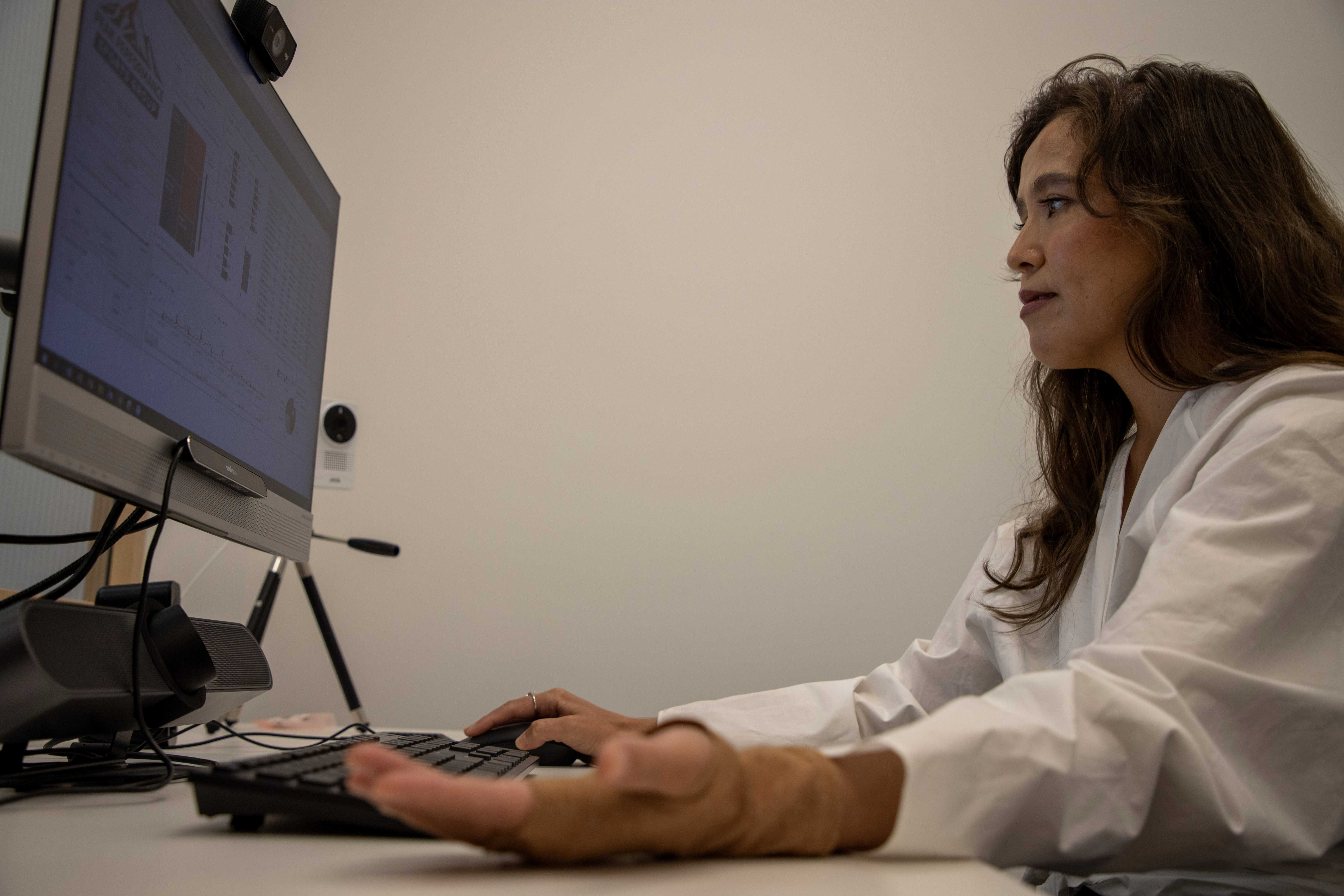
A total of 31 participants completed the study in two stages. First, they completed a Visual Symbol Search (VSS) task to assess visual search propensity, or how efficiently they locate relevant information among distractors. This task was built in PsychoPy 2024.2.4 and synchronized with Tobii Pro Lab for gaze tracking.

In the second stage, participants engaged with Business Builders’ Maple Heir, a business fundamentals simulation developed by Dr. Michael Bliemel in collaboration with ERPsim Lab at HEC Montréal. The simulation was integrated with SAP Analytics Cloud, where participants answered 15 analytical questions related to sales, marketing, pricing, and profitability by interpreting interactive dashboards under time constraints.

To capture users' both observable behavior and internal responses, we used a multimodal measurement setup:

  • Tobii Pro Fusion and Tobii Pro Lab to record eye movements, fixations, saccades, and pupil dilation

  • Biopac EDA sensors to capture physiological arousal through electrodermal activity

  • FaceReader 9.0 to analyze facial expressions and emotional valence

  • Qualtrics to collect self-reported measures, including affective state and perceived cognitive load

  • Performance was assessed using two core metrics: users' level of accuracy and response time when solving complex analytical business problems.

All streams were synchronized through the COBALT ecosystem at Tech3Lab, including COBALT BlueBox, COBALT Capture, and COBALT Photobooth, which allowed precise alignment of behavioral, physiological, and self-reported data.

The resulting dataset was analyzed in SAS Studio using mixed-effects regression models and ANOVA, with additional visualizations created in Microsoft Power BI.

Showcase image
Showcase image
Showcase image
insights & recommendations.

This research shows that performance in data-intensive environments depends on more than visual clarity alone. Users differ in how they search, interpret, and respond to complex information, so dashboards should be designed to support different cognitive needs.

Recommendations

  • Reduce visual clutter and improve grouping of key metrics

  • Use progressive disclosure to manage complexity

  • Offer simpler and more advanced views for different users

  • Support engagement without overwhelming working memory

  • Pair the dashboard design with training that improves data interpretation

These findings are especially relevant for enterprise tools and analytics systems where fast, accurate decision-making matters.

takeaways.

This study shows that analytical performance in data-rich environments is not driven by interface design alone. Instead, it emerges from the interaction between perceptual abilities, cognitive effort, and emotional engagement.

1. Visual search drives accuracy, not speed

Users who are better at locating relevant information achieve higher accuracy. However, they are not necessarily faster. Strong performers tend to slow down, verify information, and prioritize correctness over speed.

Key takeaway: Good performance is not just about efficiency. It is about effective information processing.

2. Task complexity increases effort and time

As task complexity increases, users take longer to complete tasks. This reflects a natural compensation strategy where users invest more effort to maintain performance.

Key takeaway: More complex tasks require more time.

3. Performance depends on multiple interacting factors

Accuracy and speed are shaped by more than visual search ability alone. Emotional state, attention patterns, and cognitive load all influence how users perform.

Key takeaway: Analytical performance is a system, not a single skill.

4. Optimal performance occurs under moderate cognitive load

Too little challenge leads to disengagement, while too much overwhelms working memory. The best performance happens in a balanced, moderate range of effort.

Key takeaway: There is a “sweet spot” for cognitive demand.

5. Attention must be flexible, not overly focused

Users who maintained a rigid, highly focused attention pattern were slower without being more accurate. Effective performance requires switching between scanning and detailed inspection.

Key takeaway: Good analysis depends on balancing exploration and focus.

6. Positive engagement supports better outcomes

Users who experienced more positive emotional states performed both faster and more accurately. In contrast, excessive perceived effort slowed them down.

Key takeaway: Emotional experience plays a functional role in performance.

7. Users are not all the same

Individual differences, such as Need for Cognition and visual search ability, shape how users interact with the same dashboard.

Key takeaway:  One-size-fits-all design does not work for complex analytics tools.

testimonial.

Congratulations Aizhan,

We are very pleased to inform you that you have been awarded a grade of A. Well done, you can be very proud! Once again, congratulations on this excellent achievement.

Author image
Pierre-Majorique Léger

Professeur Titulaire Chaire en Expérience Utilisateur Co-Fondateur et Chercheur TechLab Directeur Laboratoire ERPsim Chercheur IVADO